
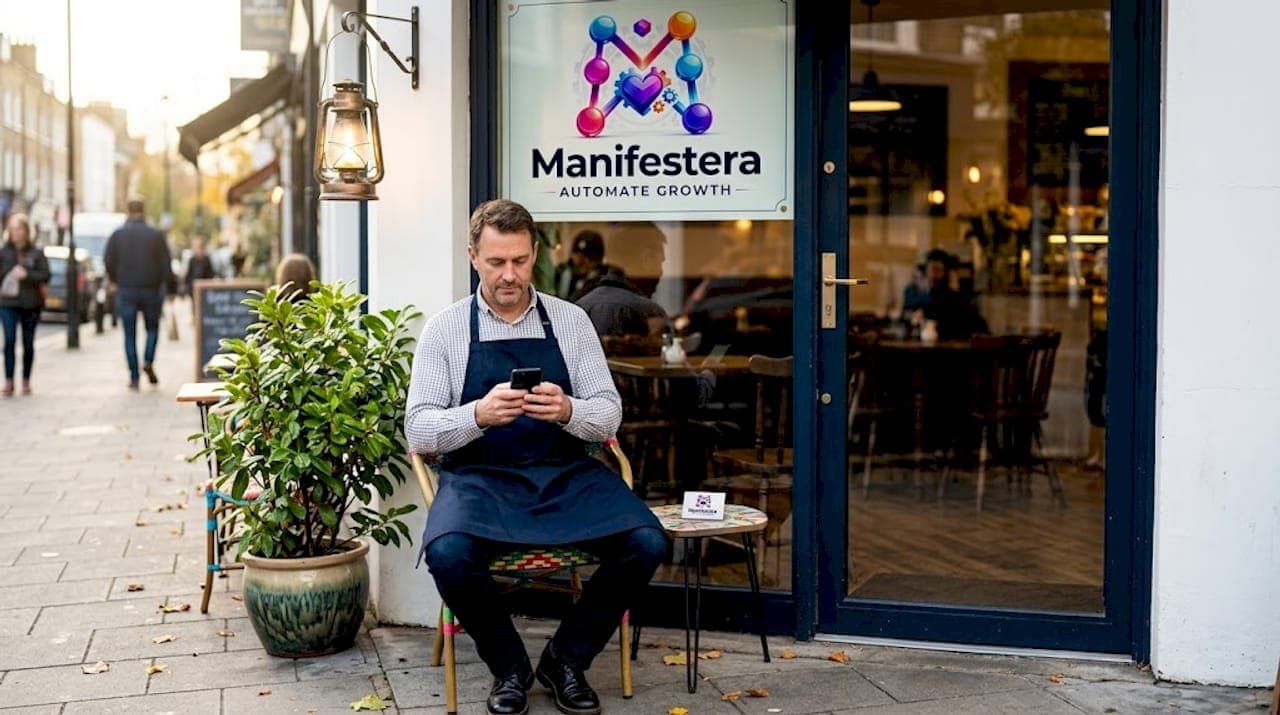
If you've ever wondered why some small businesses seem to own their neighborhood online while others barely show up in search results, the answer is often hyperlocal digital marketing. Unlike broad local campaigns that target an entire city, hyperlocal marketing focuses on a tight geographic radius, sometimes just a few blocks, to reach customers who are physically close and ready to act. This article breaks down exactly what hyperlocal digital marketing is, why it works so well for SMBs, and how you can build a strategy that turns your immediate neighborhood into your most powerful growth channel.
Table of Contents
- Key Takeaways
- What is hyperlocal digital marketing, exactly?
- Core components of an effective hyperlocal strategy
- Benefits of hyperlocal marketing beyond the obvious
- How to do hyperlocal marketing: campaigns that work
- Common challenges in hyperlocal digital marketing
- My take on why hyperlocal is still underestimated
- How Manifestera helps you dominate your local area
- FAQ
Key Takeaways
| Point | Details |
|---|---|
| Precision over reach | Hyperlocal marketing targets a 1-5 mile radius, cutting wasted spend by focusing on customers who can actually visit you. |
| NAP consistency is non-negotiable | Identical Name, Address, and Phone data across all platforms directly determines your "near me" search ranking. |
| Geofencing closes the loop | Location-based ads can attribute digital impressions to actual store visits within 30 days, giving you real ROI data. |
| Community content wins loyalty | Using local landmarks and neighborhood language in your content builds trust that generic ads cannot replicate. |
| SMBs have a built-in edge | Small businesses understand local nuances better than large corporations, making hyperlocal the great equalizer. |
What is hyperlocal digital marketing, exactly?
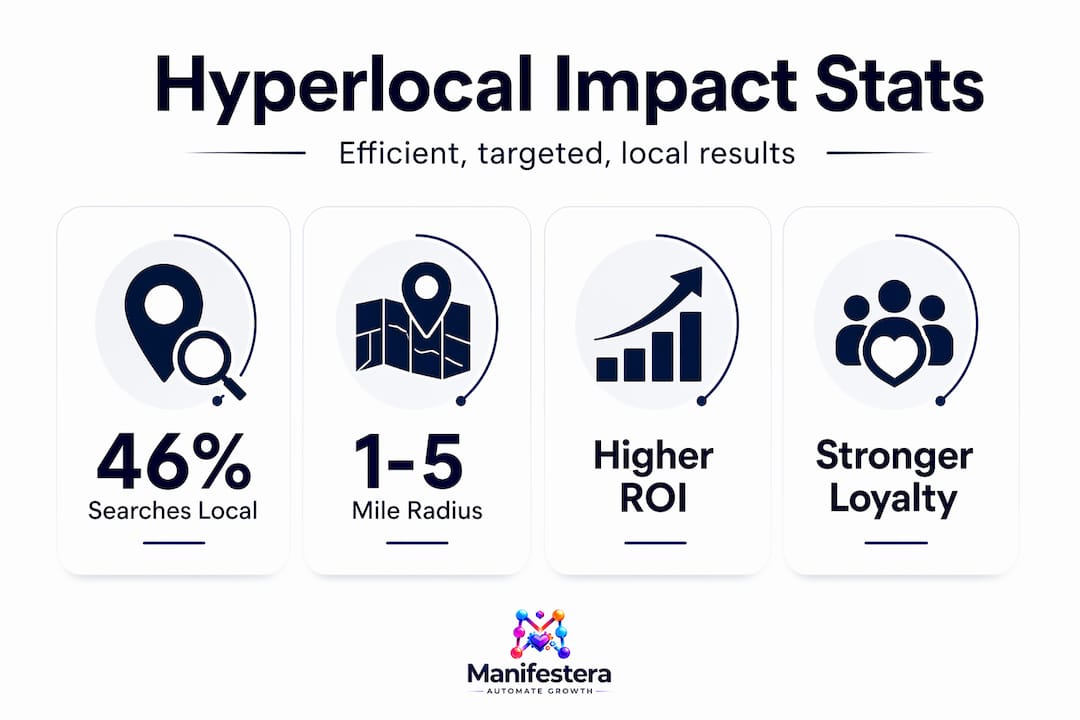
Most businesses think "local marketing" means targeting their city or metro area. Hyperlocal digital marketing goes much further. It means targeting customers within a tightly defined geographic radius, typically 1-5 miles around your physical location, a delivery hub, or a specific event. The geographic scale shrinks from "the city" down to a neighborhood, a few city blocks, or a single zip code.
Think about what that precision means in practice. A pizzeria in Brooklyn's Park Slope neighborhood does not need to advertise to someone in Bay Ridge. A dentist in Midtown Manhattan does not benefit from impressions served in the Bronx. Hyperlocal digital marketing eliminates that kind of geographic mismatch entirely.
Here is how hyperlocal targeting differs from broader local marketing:
- City-wide local marketing targets an entire metro area or multiple zip codes and suits businesses with wide service areas, like a regional HVAC contractor.
- Neighborhood hyperlocal marketing targets a specific district, such as Williamsburg or Astoria, and works best for foot-traffic-dependent businesses.
- Block-level targeting operates within walking distance of a storefront and is ideal for impulse purchases like coffee shops, florists, or gyms.
- Geofence targeting draws a virtual boundary around a specific location, such as a competitor's store or a local event venue, and serves ads to anyone who enters that zone.
The precision of hyperlocal targeting is what makes it powerful. 46% of Google searches carry local intent, with "near me" queries reaching 1.5 billion per month. Those searchers are not browsing. They are ready to buy, eat, visit, or call. Getting in front of them at exactly the right moment, in exactly the right location, is what a solid hyperlocal marketing strategy is designed to do.
Core components of an effective hyperlocal strategy
Understanding what hyperlocal marketing is gets you started. Knowing which specific components make it work is what gets you results. The following are the building blocks every business owner needs to prioritize.
-
Consistent NAP data. Your business Name, Address, and Phone number must be identical across every online directory, social profile, and map listing. Even a minor variation, like "St." versus "Street," can confuse search engines and hurt your "near me" rankings. Start with Google Business Profile, Yelp, Apple Maps, and Bing Places.
-
Optimized Google Business Profile (GBP). Your GBP is the cornerstone of what is local SEO for most small businesses. Upload 10-15 high-quality photos, collect and respond to reviews, keep your hours current, and post weekly updates. A fully optimized GBP dramatically increases your chances of appearing in the local map pack, the three-result box that appears at the top of local search results.
-
Geo-targeted mobile ads. Platforms like Google Ads and Meta allow you to draw precise geographic boundaries around your ad campaigns. You can target by radius, zip code, or custom polygon. For a coffee shop in Queens, that might mean a 0.5-mile circle around your front door. Learning NYC audience segmentation on Meta can help you layer demographic and interest filters on top of location for even sharper targeting.
-
Geofencing for real-time delivery and measurement. Geofencing places a virtual boundary around a location and serves ads to users who enter that zone via their mobile devices. Beyond delivery, geofencing tracks store visits for up to 30 days after an ad impression, giving you attribution data that most digital channels cannot provide.
-
Neighborhood-specific SEO. This means adding hyper-specific location keywords to your website, like "best ramen in Astoria Queens" instead of just "best ramen NYC." Make your site mobile-friendly, load fast, and use schema markup to help search engines understand your business category and location.
-
Local content and community engagement. Sponsor a local little league team. Write a blog post about an upcoming neighborhood street fair. Feature a longtime customer. This kind of content builds genuine connection that generic advertising cannot manufacture.
Pro Tip: Keep your campaigns focused using the 3-3-3 rule: concentrate on three core messages, three audience segments, and three marketing channels. For hyperlocal work, that might mean Google Search, Instagram geo-ads, and your Google Business Profile, all carrying the same neighborhood-specific message.
Benefits of hyperlocal marketing beyond the obvious
Most articles tell you hyperlocal marketing reduces wasted ad spend. That is true, and precision targeting does improve ROI by concentrating budget on customers who can realistically act on your message. But the deeper benefits go beyond efficiency.
"Consumers prefer brands that feel like neighborhood neighbors, creating stronger loyalty than generic corporate advertising can achieve." DMEXCO
That quote captures something most marketing metrics miss. When a business references the local park in its Instagram ad, mentions a nearby landmark in its email, or sponsors a community event, it stops being a vendor and starts being a neighbor. That shift in perception builds loyalty that no amount of retargeting can replicate.
There is also the competitive angle. Large corporations spend millions on national campaigns. They cannot pivot quickly to reference your neighborhood's annual festival or the new subway station opening nearby. SMBs excel at hyperlocal marketing precisely because their deep understanding of local needs lets them be the obvious choice within their immediate communities. You know your customers. A national chain does not.
Finally, consider what building "local category authority" actually means in practice. A family-owned hardware store that writes guides on preparing Brooklyn brownstones for winter, answers neighborhood Facebook group questions about plumbing, and appears in local newsletters becomes the default answer when anyone in that area needs hardware help. Consistent local storytelling outperforms high-frequency banner ads every time.
How to do hyperlocal marketing: campaigns that work
Knowing the theory is one thing. Putting it into practice requires specific decisions and a clear framework.
Define your target area with data first. Pull your existing customer addresses from your POS or CRM. Map where your orders cluster. Use Google Analytics to see which zip codes drive your traffic. That data tells you where your natural radius already exists, and where it could grow.
Craft content with local signifiers. Generic content like "great coffee in New York City" does not connect. Content with neighborhood landmarks and language like "your pre-work stop near the 7th Ave F/G stop" or "serving Carroll Gardens since 2012" signals local relevance to both search engines and readers. Your content should make a neighbor smile in recognition.

Here is a quick comparison of hyperlocal advertising examples to consider:
| Campaign type | Best use case | Measurement metric |
|---|---|---|
| Geofencing a competitor's location | Conquest marketing for foot traffic | Store visit attribution (30-day window) |
| Neighborhood Instagram ads | Brand awareness within a specific district | Reach, saves, and profile visits |
| Local event sponsorship | Community trust and in-person visibility | Event attendance, mention tracking |
| Hyperlocal email marketing | Re-engaging nearby past customers | Open rate, click-to-visit rate |
| Google Local Services Ads | High-intent "near me" searches | Calls and booking conversions |
A few best practices for hyperlocal marketing to keep campaigns tight:
- Set ad frequency caps so the same small audience does not see your ad 20 times in a week.
- Rotate creative every two to four weeks to prevent fatigue.
- Use UTM parameters on all URLs so you can attribute digital traffic by campaign and location.
- Check your Google Ads campaign settings to confirm targeting is set to "presence" not "interest," which prevents serving ads to people who simply searched about your area.
Pro Tip: Pair geofencing campaigns with hyperlocal email marketing for the same audience segment. Someone who walked near your store and also receives your neighborhood-specific email is far more likely to convert than someone reached by either channel alone.
Common challenges in hyperlocal digital marketing
Hyperlocal digital strategies can underperform when a few critical mistakes go uncorrected.
- NAP inconsistency. Even minor address discrepancies across listings degrade your search visibility. Use a tool like BrightLocal or Yext to audit and correct citations at scale.
- Generic messaging. Ads that say "serving the NYC area" when your target radius is three blocks in Flushing, Queens, fail to resonate. Specificity is the point.
- Ad frequency saturation. Hyperlocal audiences are small. Bombarding the same 500 people with the same ad daily burns goodwill fast.
- Data privacy missteps. Location-based targeting must comply with platform policies and privacy regulations. Avoid collecting precise location data without clear consent, and rely on platform-level geo-targeting rather than tracking individuals directly.
- Profile neglect. Your Google Business Profile is not a set-it-and-forget-it asset. Outdated hours, unanswered reviews, and old photos signal an inactive business to both customers and search algorithms.
- Inauthenticity. Referencing a neighborhood you barely serve, or manufacturing local content that feels forced, backfires. Customers recognize performative localism, and it erodes trust instead of building it.
My take on why hyperlocal is still underestimated
I have worked with enough local businesses to say this confidently: most owners think "local marketing" when they mean "city-wide marketing," and that gap costs them real revenue.
What I have found is that the businesses generating the strongest ROI from digital are not the ones with the biggest budgets. They are the ones who got specific. A nail salon targeting a two-block radius around its Williamsburg storefront on Instagram, with creative that references local street art and neighborhood life, will outperform a city-wide campaign with a polished but generic look every single time.
There is also an emotional dimension that rarely shows up in marketing plans. When you treat your customers like neighbors, when you know their neighborhood and speak their language, they feel it. That feeling creates word-of-mouth that no paid campaign can manufacture. The ROI is real, but the mechanism is human.
My honest advice: start smaller than feels comfortable. Target a tighter radius than you think you need. Make your content so specific that only someone in your immediate neighborhood would fully get the reference. That specificity is not a limitation. It is your advantage.
— Manifestera
How Manifestera helps you dominate your local area
If you are ready to move from understanding hyperlocal digital marketing to actually executing it, Manifestera builds exactly these kinds of strategies for local businesses across New York City and beyond.
From local SEO services that get you ranking in neighborhood-specific searches to precision Google Ads campaigns and Facebook Ads with geo-targeting built in, Manifestera handles every component of hyperlocal marketing execution. The agency serves businesses across Manhattan, Brooklyn, Queens, and the Bronx, with strategies tailored to the specific competitive dynamics of each borough. Contact Manifestera today to get a custom hyperlocal marketing plan built around your location and growth goals.
FAQ
What is hyperlocal digital marketing in simple terms?
Hyperlocal digital marketing targets potential customers within a very tight geographic area, typically 1-5 miles around a business, using tools like geofencing, local SEO, and geo-targeted ads to reach nearby people who are ready to buy.
How does hyperlocal marketing differ from local SEO?
Local SEO is one tactic within a broader hyperlocal strategy. What is local SEO, specifically? It is the practice of optimizing your online presence to rank in location-based searches. Hyperlocal marketing layers additional channels like geofencing, neighborhood content, and radius-targeted paid ads on top of that SEO foundation.
What are the biggest benefits of hyperlocal marketing?
The main benefits of hyperlocal marketing include reduced wasted ad spend, higher foot traffic, stronger community loyalty, and better conversion rates, because you are reaching people who can realistically act on your message within minutes of seeing it.
What is a good hyperlocal advertising example?
Geofencing a competitor's location and serving mobile ads to customers who enter that zone is one of the most direct hyperlocal advertising examples. Another is running Instagram ads targeted to a single neighborhood using local landmark imagery to drive recognition and clicks.
How do I get started with targeting local customers online?
Start by auditing your NAP consistency across all directories, optimizing your Google Business Profile, and running a geo-targeted ad campaign within a 1-2 mile radius of your location. Pair that with neighborhood-specific content on your website and social channels to build presence organically.