

An NYC influencer collaboration ad strategy is defined as the practice of partnering with local creators to produce authentic content, then amplifying that content through paid ad tools on platforms like Meta and YouTube to drive measurable brand results. This approach, formally called influencer partnership advertising, gives NYC marketers a distinct edge: creator content carries social proof that standard brand ads cannot replicate. Platforms like Meta Ads Manager and YouTube Creator Partnerships have built dedicated infrastructure to make this scalable. FTC compliance is non-negotiable from day one. When executed correctly, this strategy combines organic creator trust with paid targeting precision to produce campaigns that outperform traditional ad formats across New York social media campaigns.
How do Meta partnership ads work for NYC influencer collaborations?
Meta partnership ads are the most direct way to turn creator content into a paid ad without losing the authenticity that makes it perform. The setup works in three steps:
- Creator tags your brand as a paid partner inside their Instagram or Facebook post settings.
- Creator grants boosting permission, giving your brand access to promote that post through Meta Ads Manager.
- Your brand runs the ad with both the creator's handle and your brand name appearing in the ad header, signaling a verified collaboration to the algorithm and the audience.
This dual-header format matters more than it looks. Meta partnership ads improve ad ranking and trust signals because the content carries creator authenticity alongside brand authority. NYC arts organizations using this format reported higher click-through rates, increased ticket purchases, and stronger revenue compared to standard brand-only ads. That result is consistent: when creative tone aligns with local audience expectations, partnership posts outperform native brand content across most campaign objectives.
From a permissions standpoint, you manage everything inside Meta Ads Manager under the "Partnership Ads" section. You can target the boosted post to custom audiences, apply retargeting layers, and test multiple creator posts against each other as ad variations. Pairing this with NYC audience segmentation sharpens your targeting further by borough, interest, and behavior.
Pro Tip: Keep the creator's original caption and visual style intact when boosting. Editing the tone to sound more "brand-like" consistently reduces engagement. The organic feel is the performance driver.
FTC rules apply to every boosted post. Meta's "Paid Partnership" label supplements disclosure but does not replace it. The creator must include a clear verbal or written disclosure within the content itself.
What are the advantages of YouTube Creator Partnerships for NYC brands?
YouTube's Creator Partnerships platform consolidates what used to be separate tools, BrandConnect and the Creator Partnerships Hub, into one unified system inside Google Ads. For NYC brands running video campaigns, this is a significant operational upgrade. Key features include:
- AI-powered creator discovery that matches your brief to relevant creators based on audience overlap, content category, and performance history.
- Open Call, a brief-first submission model where you publish your campaign requirements and creators apply directly.
- Creator Partnerships Boost, which lets you convert an organic creator video into a paid YouTube ad without re-uploading or reformatting.
- Co-branded ad formats with dual click targets, one to the creator's channel and one to your brand's landing page.
- Custom audience segments built from video viewers, enabling remarketing and lookalike targeting based on who watched the creator's content.
YouTube Creator Partnerships supports API integration with influencer marketing software, which means your existing workflow tools can pull creator data and automate campaign builds. For NYC brands managing multiple creator relationships, this removes a significant manual bottleneck. The platform also connects directly to Google Ads management workflows, so your paid media team can run creator-boosted videos alongside standard YouTube campaigns from a single interface.
The Open Call feature rolled out in the US first and is expanding through 2026. It lowers the barrier for smaller, niche creators to participate in brand campaigns, which is particularly valuable in a city as creatively diverse as New York.
Pro Tip: Use Open Calls specifically to source diverse NYC creators across neighborhoods like Astoria, Bushwick, and Harlem. Hyper-local creator voices resonate with borough-specific audiences in ways that broad influencer casting cannot replicate.
How to choose and manage NYC influencers for collaboration campaigns
The right management model depends entirely on your campaign volume. Direct management works well for brands running fewer than five influencer deals per quarter. At that scale, you can handle outreach, contracts, and approvals internally without significant overhead. Once you cross 20 deals per quarter, an agency becomes the more efficient choice. Between five and 20 deals, a hybrid model, where an in-house program manager works alongside a boutique agency, tends to produce the best balance of control and scale.
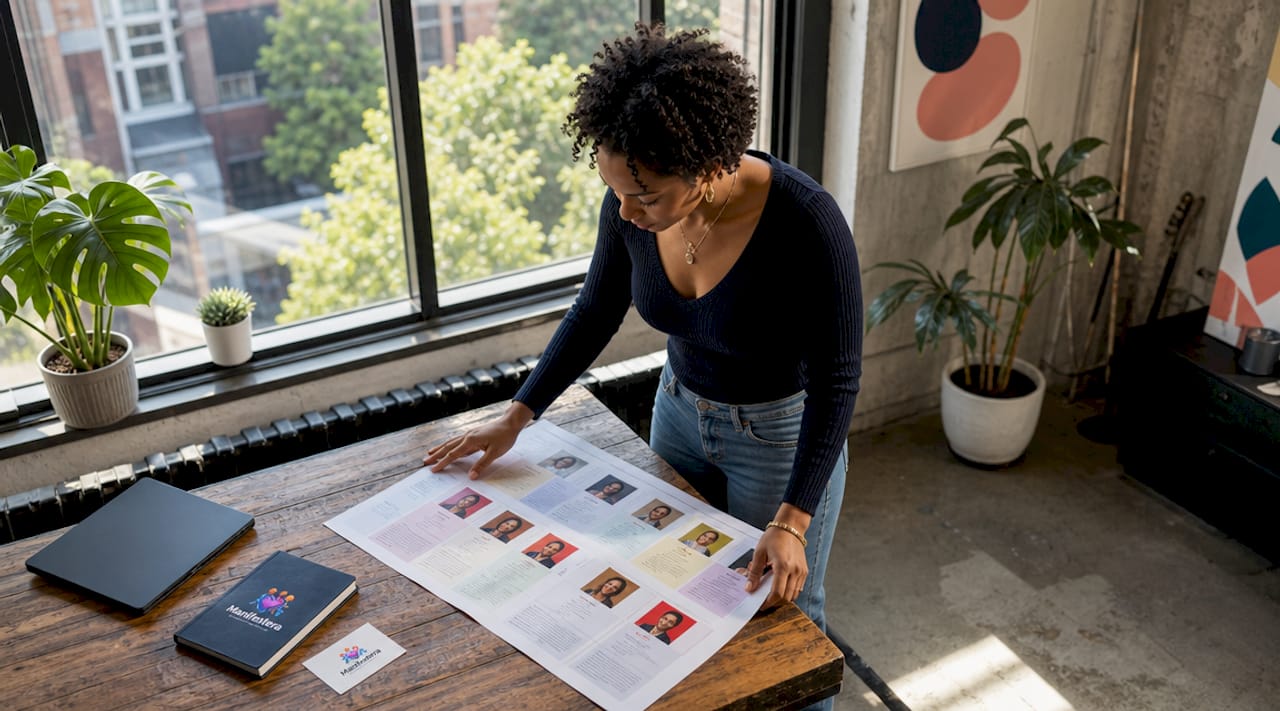
Budget expectations for NYC influencer agencies vary widely. Agency retainers range from $4,000 to $8,000 per month for boutique firms with a 20 to 25 percent markup on creator spend, $8,000 to $20,000 for mid-size agencies with a 15 to 20 percent markup, and $20,000 or more for enterprise-level firms charging 10 to 15 percent on top of spend. These numbers help you set realistic expectations before you start conversations with agencies.
| Factor | Agency retainer | Direct management |
|---|---|---|
| Best for | 20+ deals per quarter | Under 5 deals per quarter |
| Cost structure | Monthly retainer plus creator markup | Internal labor plus creator fees |
| Talent access | Broader network and pre-vetted rosters | Limited to your own outreach |
| Control | Shared with agency | Full control |
| Scalability | High | Low to moderate |
Creator tier selection also matters. Effective NYC influencer programs mix nano creators (1,000 to 10,000 followers), micro creators (10,000 to 100,000), and macro creators rather than relying on reach alone. Measure engagement quality and attention, not just follower count. A nano creator in Williamsburg with 4,000 highly engaged local followers often drives more foot traffic for a Brooklyn restaurant than a macro creator with 500,000 national followers.
Pro Tip: Negotiate usage rights and content reuse permissions in the initial contract, not after delivery. Securing rights to repurpose creator assets for paid ads, retargeting, and seasonal campaigns upfront saves significant time and legal friction later.
What are the essential FTC compliance rules for influencer ads?
FTC compliance in influencer advertising is defined by one core principle: any material connection between a brand and a creator must be disclosed clearly, conspicuously, and in a way that viewers cannot miss. A material connection includes payments, free products, affiliate commissions, or any other benefit received in exchange for content.
The FTC requires that disclosures appear early in the content, not buried in hashtags or placed after a long caption. Platform labels like Meta's "Paid Partnership" tag supplement disclosure but do not replace it. The creator must include an explicit verbal or written statement within the content itself. Compliance applies across every format:
- Static posts: Disclosure must appear in the caption, above the "more" fold.
- Videos: Verbal disclosure at the start of the video, not just in the description.
- Livestreams: Repeated disclosures throughout, since viewers join at different times.
- Stories: Text overlay that is large enough to read and stays on screen long enough to register.
- Podcasts: Verbal disclosure at the beginning of the sponsored segment.
Brands are accountable for their creators' disclosures. If a creator fails to disclose properly, the brand shares legal exposure. Build a pre-approval workflow that reviews every piece of content before it goes live.
Whitelisting and dark ads introduce additional risk. When you edit creator content after gaining boosting permissions, liability for any claims made in that content shifts toward your brand. Contracts must explicitly define what edits are permitted, what claims are restricted, and who is responsible for compliance in each scenario. Compliance is no longer a reactive checklist. It is an embedded workflow that protects both your brand and your creator partners.
How to integrate influencer content into your paid ad strategy
Repurposing creator content across paid campaigns multiplies the return on every dollar you spend on influencer partnerships. The process requires structure from the start:
- Define reuse pathways before the brief. Specify in the creator contract which assets can be used for paid ads, retargeting, email, and organic social. Treating creator outputs as modular inventory from the beginning means you produce assets designed for multi-channel use, not just a single post.
- Set approval workflows and editing permissions. Decide who approves content before it goes live, what edits your brand can make, and how long the approval window is. A 48-hour review cycle is standard for most NYC campaigns.
- Build ad variations from a single creator shoot. One creator video can generate multiple ad cuts: a 15-second pre-roll, a 30-second mid-roll, a static thumbnail for display, and a short-form clip for Instagram Reels or YouTube Shorts.
- Coordinate boosting across platforms. Run Meta partnership ads and YouTube Creator Partnerships Boost simultaneously when a creator produces content for both platforms. This amplifies reach without doubling your creative production cost.
- Measure creator content against native brand content. Track click-through rate, cost per acquisition, and view-through rate separately for creator-boosted ads versus standard brand ads. Most NYC campaigns show creator content outperforming brand content on cost per click within the first two weeks.
| Content type | Best use case | Key metric |
|---|---|---|
| Creator video (long form) | YouTube pre-roll, awareness | View-through rate |
| Creator video (short form) | Instagram Reels, YouTube Shorts | Engagement rate |
| Creator static image | Meta feed ads, retargeting | Click-through rate |
| Creator story clip | Meta Stories, top-of-funnel | Swipe-up rate |
You can also manage influencer program workflows through dedicated platforms that handle asset storage, rights tracking, and campaign reporting in one place. This is especially useful when you are managing five or more active creator relationships simultaneously.
Key takeaways
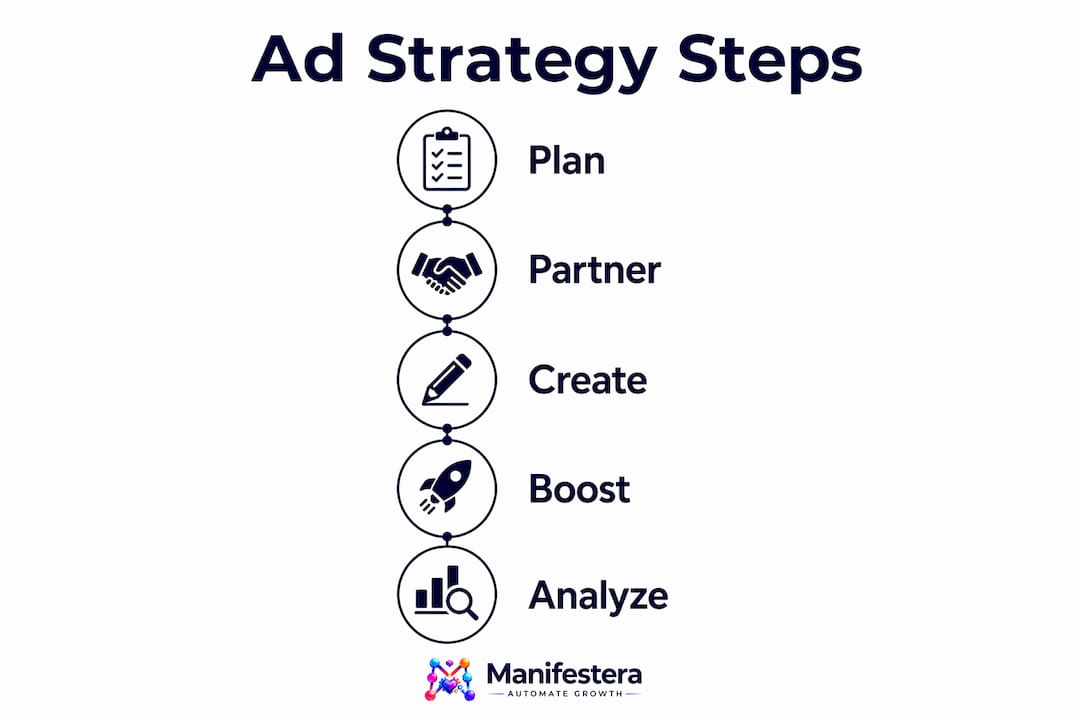
A successful NYC influencer collaboration ad strategy requires platform-specific tools, clear operational contracts, and embedded FTC compliance to convert creator content into measurable ad performance.
| Point | Details |
|---|---|
| Meta partnership ads | Both brand and creator appear in the ad header, improving trust signals and ad ranking. |
| YouTube Creator Partnerships | Open Call and Creator Partnerships Boost enable discovery, collaboration, and paid amplification in one platform. |
| Management model | Use direct management under 5 deals per quarter; shift to agencies or hybrid models above that threshold. |
| FTC compliance | Disclosures must be early, visible, and explicit. Platform labels do not replace in-content disclosure. |
| Content repurposing | Define reuse rights in the initial contract to turn one creator shoot into multiple ad variations. |
Manifestera's take on what actually moves the needle in NYC
The biggest mistake NYC brands make with influencer collaboration is treating it as a content production exercise rather than a paid media strategy. You hire a creator, get the post, and then wonder why the organic reach did not translate into sales. The post was never the product. The ad build was.
What Manifestera has seen work consistently is a tight integration between the creator relationship and the paid media workflow. That means the brief specifies ad formats, the contract locks in usage rights, and the boosting campaign is live within 48 hours of the creator posting. The organic post seeds the algorithm. The paid campaign scales what works.
The other thing worth saying plainly: local relevance in New York is not a nice-to-have. A creator who lives in Crown Heights and speaks to that community carries credibility that no amount of paid targeting can manufacture. The most effective New York social media campaigns we have seen combine borough-specific creators with precise Meta audience segmentation, not broad national influencers with generic messaging.
Compliance is where brands consistently underinvest until something goes wrong. Build the disclosure review into your approval workflow before launch, not after a complaint. The FTC's enforcement trend is moving toward brand accountability, not just creator accountability. That shift changes the risk calculus significantly.
Finally, do not wait for Open Calls to mature before experimenting. The brands that build early relationships with emerging NYC creators through YouTube's brief-first submission model will have a significant cost and authenticity advantage over those who enter the market later.
— Manifestera
Ready to run influencer collaboration ads in NYC?
Manifestera works with NYC businesses to build influencer collaboration ad strategies that connect creator content directly to paid media performance. From Meta partnership ad setup to YouTube Creator Partnerships campaign builds, the team manages every step with data-driven precision.
Whether you are launching your first creator campaign or scaling an existing influencer program, Manifestera's Facebook Ads management service integrates creator content directly into your paid social workflow. For brands in Manhattan and across the five boroughs, the NYC digital marketing team is ready to build a campaign structure that turns creator authenticity into measurable ROI. Contact Manifestera to get started.
FAQ
What is an NYC influencer collaboration ad strategy?
An NYC influencer collaboration ad strategy is the practice of partnering with local creators to produce content, then amplifying that content through paid ad tools on Meta and YouTube to improve brand visibility and ad performance.
How do Meta partnership ads differ from standard boosted posts?
Meta partnership ads display both the creator's handle and the brand name in the ad header, improving trust signals and ad ranking. Standard boosted posts show only the brand, which removes the authenticity benefit of creator content.
How much does it cost to work with an NYC influencer agency?
NYC influencer agency retainers range from $4,000 to $75,000 or more per month depending on agency size, plus a 10 to 25 percent markup on creator spend.
Do platform paid partnership labels satisfy FTC disclosure requirements?
No. FTC guidelines require that creators include an explicit disclosure within the content itself. Platform labels like Meta's "Paid Partnership" tag supplement but do not replace that requirement.
When should I use YouTube Creator Partnerships instead of Meta partnership ads?
Use YouTube Creator Partnerships when your campaign objective is video-first awareness, long-form storytelling, or building custom audiences from video viewers. Use Meta partnership ads when your priority is direct response, feed-based engagement, or retargeting existing customers.